
Pay-per-click advertising looks simple on the surface — set a budget, pick some keywords, write an ad, and wait for the phone to ring. In reality, most small businesses lose a big chunk of their PPC advertising budget to a handful of avoidable mistakes long before they ever see a real return.
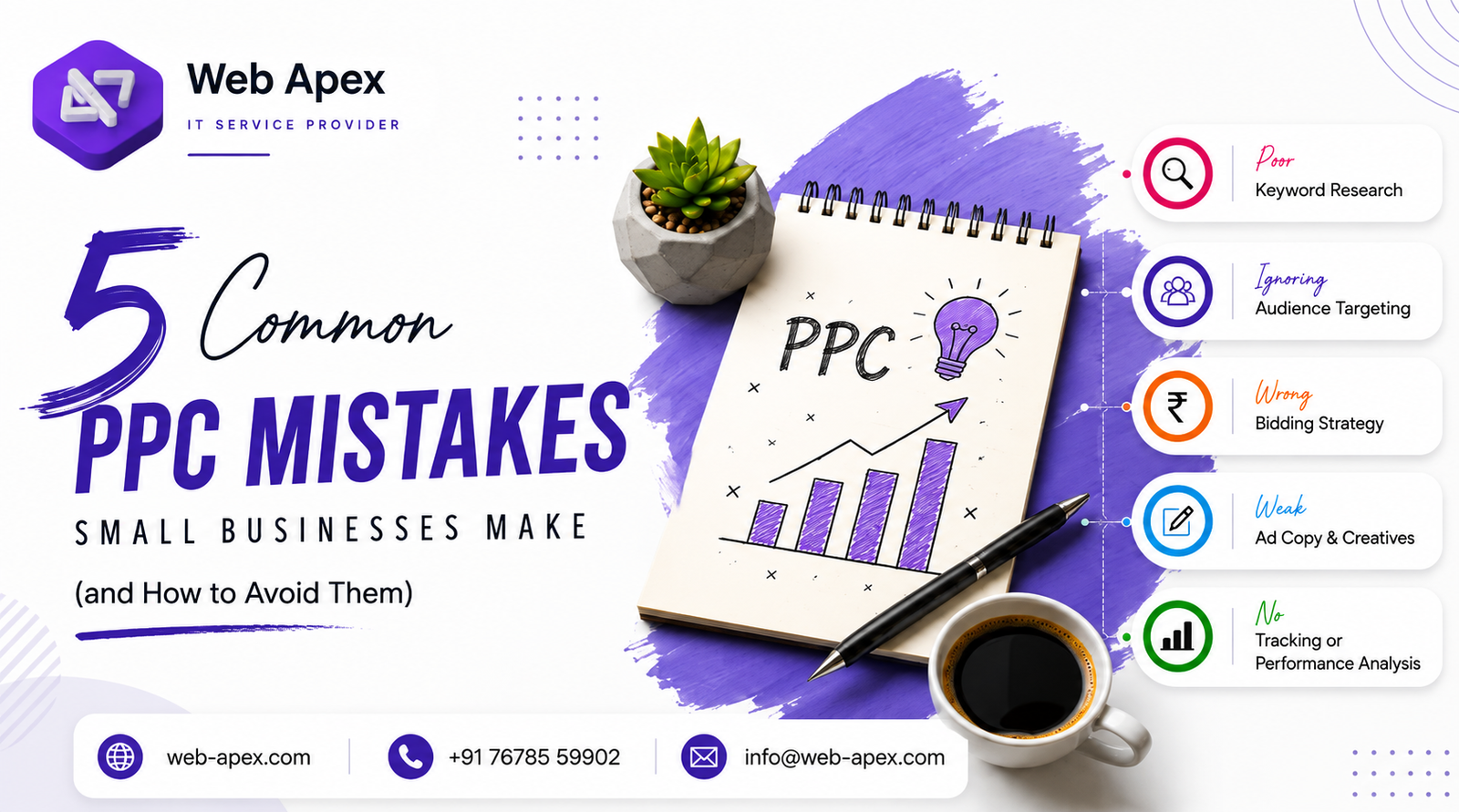
These are some of the most common PPC mistakes small businesses run into again and again, and the frustrating part is that none of them are complicated to fix once you know what to look for. Below are five of the most frequent PPC mistakes, along with how to avoid PPC mistakes like these going forward.
Table of Contents
1. Not Defining What a “Result” Actually Looks Like
A lot of PPC campaigns are set up with a vague goal like “get more traffic” or “get more visibility.” The problem is, traffic on its own doesn’t pay the bills — enquiries, calls, and sales do.
Before spending a single rupee, decide exactly what counts as success for your business. That might be:
- A phone call
- A filled-out contact form
- A WhatsApp message
- An online purchase
- A booking or appointment
Once that’s defined, Google Ads can actually be set up to optimise toward that action, using conversion tracking — instead of just chasing clicks that may never turn into business.
2. Bidding on Keywords That Are Too Broad
High search volume feels tempting, but a broad keyword like “website” or “clinic” attracts all kinds of searchers — many of whom aren’t looking to buy anything. Someone searching “website” might want a job, a tutorial, or a free template, not a paid service.
The fix is to get specific. Use Google’s Keyword Planner to see how a keyword is actually being searched, and lean toward terms that show clear buying intent — “hire website developer near me” will usually convert far better than “website” ever will.
It also helps to regularly check the search terms report inside your Google Ads account. This shows the exact phrases people typed before clicking your ad — and it’s often where you’ll spot irrelevant traffic quietly draining your budget.
3. Skipping Negative Keywords
This is one of the most overlooked settings in Google Ads. Negative keywords tell Google when not to show your ad, which is just as important as choosing which keywords to target.
For example, a paid web design agency running ads for “website design” probably doesn’t want to show up for “free website design” or “website design course.” Without negative keywords filtering those out, you end up paying for clicks that were never going to convert. Google’s own guide on using negative keywords is worth reviewing before your next campaign goes live.
4. Writing Ads (and Landing Pages) That Don’t Match the Search
A headline like “Best Services — Contact Us Today” could belong to literally any business. It gives someone no real reason to click, and even less reason to trust the click was worth it.
Good PPC ad copy speaks directly to the search that triggered it — mentioning the specific service, a genuine differentiator, or a clear next step. And the page someone lands on after clicking matters just as much as the ad itself. Sending every visitor to a generic homepage, instead of a page built around what they actually searched for, creates unnecessary friction right when they’re most ready to act. A well-structured website design with dedicated service pages makes this kind of targeted landing page possible in the first place.
5. Never Reviewing the Numbers That Actually Matter
Clicks and impressions are easy to look at, but they don’t tell you whether a campaign is working. Two campaigns can look completely different once you dig past the surface:
- Campaign A: 200 clicks → 2 enquiries
- Campaign B: 80 clicks → 10 enquiries
Judged on clicks alone, Campaign A looks stronger. Judged on what actually matters — enquiries — Campaign B is clearly the better use of budget. Reviewing cost-per-conversion, not just cost-per-click, is what separates a campaign that “gets traffic” from one that grows a business. Think with Google publishes regular research on what small businesses should actually be measuring here, beyond the basic dashboard metrics.
Common PPC Mistakes Small Businesses Make: A Quick Gut-Check Before You Launch
Before turning on your next campaign, it’s worth asking:
- Do I know exactly what action I’m paying for?
- Are my keywords specific enough to attract buyers, not browsers?
- Have I added negative keywords to filter out irrelevant searches?
- Does my ad copy and landing page match what the person searched for?
- Am I tracking conversions, not just clicks?
If the answer to any of these is “not sure,” that’s usually the first place to fix before increasing the budget. A bigger budget rarely fixes a campaign that isn’t targeted properly — it just means the same mistakes cost more.
Final Thoughts
PPC rewards precision more than spend. A small, well-targeted campaign with clear goals, tight keywords, and proper tracking will almost always outperform a larger budget thrown at broad targeting and generic ads. Avoiding these PPC advertising mistakes is usually what separates a campaign that just spends money from one that actually makes money for small businesses.
If you’re not sure where your current campaigns are leaking budget, it’s usually worth having someone take a second look — teams like Web Apex work through exactly this kind of audit for small businesses running Google Ads on tight budgets.
Read More: 10 Reasons Your Website Is Not Ranking on Google (2026)