
India has become one of the world’s largest hubs for web development, offering a mix of technical talent and competitive pricing that attracts businesses globally. But with thousands of agencies and freelancers to choose from, picking the right web development company in India can feel overwhelming. A wrong choice can mean missed deadlines, poor code quality, and a website that doesn’t actually serve your business goals.
If you’re looking for a reliable web development company in India, it’s important to compare experience, pricing, portfolios, and client reviews before making a decision. The right web development company in India can help you build a fast, secure, and SEO-friendly website that supports your business growth.
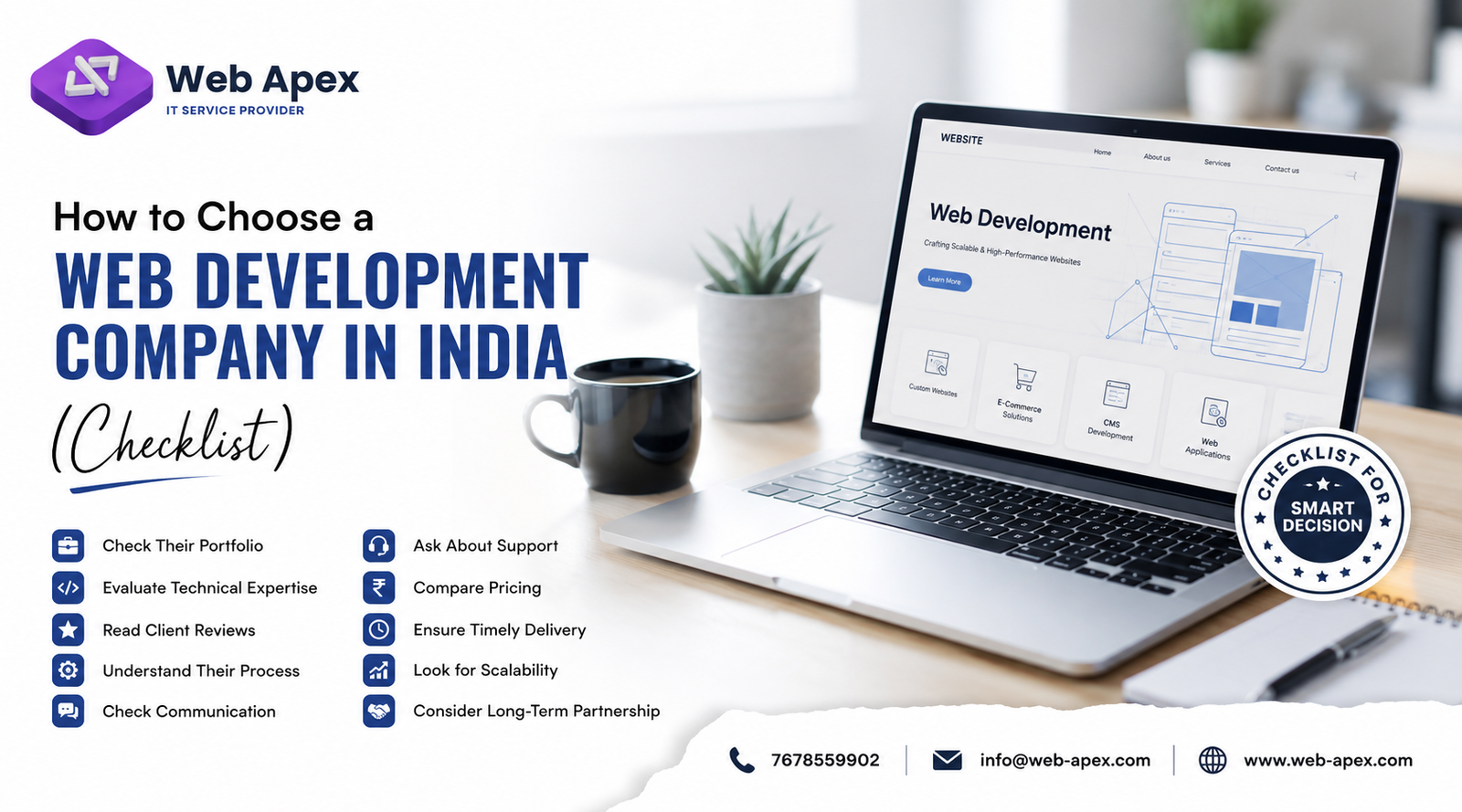
Here’s a practical checklist to help you evaluate and choose the right web development company in India.
Table of Contents
1. Define Your Project Requirements First
Before reaching out to any web development company in India, be clear on:
- What type of website or application you need (e-commerce, corporate site, custom web app, etc.)
- Your must-have features and integrations
- Your budget range and timeline
- Whether you’ll need ongoing maintenance and support after launch
A clear brief helps you get accurate quotes and filters out agencies that aren’t a good fit from the start.
2. Check Their Portfolio and Case Studies
Look for:
- Projects similar in scale or industry to yours
- Live websites you can actually visit and test
- Variety in design style, not a single repeated template
- Evidence of solving real business problems, not just “pretty” designs
A strong portfolio tells you more than any sales pitch. For reference, you can browse a live example of how a company’s project portfolio should be presented — with real client work, not just mockups. You can also check independent client reviews on trusted platforms like Clutch before making your final decision.
3. Freelancer or Agency? Know What You’re Getting Into
Before going further, decide whether you actually need a freelancer or a full web development company in India:
| Factor | Freelancer | Agency |
|---|---|---|
| Cost | Generally lower | Generally higher |
| Team backup | Single point of failure | Multiple people, less risk if someone leaves |
| Speed on small projects | Often faster | Can involve more process/overhead |
| Handling complex projects | Limited by one person’s skillset | Access to specialists (design, dev, QA, SEO) |
| Long-term support | Less reliable if freelancer becomes unavailable | Usually more structured support |
| Accountability | Informal, contract-dependent | Formal contracts, defined processes |
Freelancers can be a good fit for small, simple websites on a tight budget. For anything business-critical, scalable, or requiring ongoing support, an established web development company in India is usually the safer choice.
4. Verify Technical Expertise
Different projects need different tech stacks. Confirm the web development company in India has hands-on experience with the technologies relevant to your project — whether that’s WordPress, Shopify, React, Node.js, Laravel, or a custom stack. Some companies list out their exact website development capabilities upfront, which makes this comparison easier. Ask specifically:
- What technologies do they specialize in?
- Do they build custom solutions or rely mainly on templates/page builders?
- Can they scale the site as your traffic or features grow?
- Do they follow modern development standards, such as those outlined in the W3C web standards guidelines?
5. Read Client Reviews and Ask for References
Check reviews on platforms like Google, Clutch, or GoodFirms, but also ask directly for 2–3 past client references you can contact. Genuine agencies won’t hesitate to connect you with previous clients. It’s also worth checking whether their website design work matches the visual quality you’re expecting, since design and development go hand in hand.
6. Understand Their Development Process
A reliable web development company in India should be able to clearly explain:
- How they gather requirements
- Their design and development workflow (wireframes, prototypes, revisions)
- How they handle testing and quality assurance
- Their communication process — regular updates, project management tools used, points of contact
Vague or rushed answers here are a red flag.
7. Clarify Pricing and Contract Terms
Get a detailed, itemized quote rather than a vague lump sum. Make sure the contract clearly covers:
- Total cost and payment milestones
- What’s included vs. what counts as a paid add-on
- Ownership of source code and design files after project completion
- Revision limits and what happens if the project timeline slips
8. Typical Cost Ranges in India (Rough Guide)
Pricing varies widely across any web development company in India, but as a general starting reference:
- Basic informational website (5–10 pages): roughly ₹15,000 – ₹60,000
- Business/corporate website with custom design: roughly ₹50,000 – ₹2,00,000
- E-commerce website: roughly ₹80,000 – ₹5,00,000+, depending on catalog size and features
- Custom web application (dashboards, portals, SaaS products): ₹2,00,000 and up, depending on complexity
These are indicative ranges, not fixed rates — actual pricing depends on design complexity, number of features, integrations, and ongoing support needs. Always get a detailed, written quote rather than relying on ballpark figures. Some agencies publish structured website development packages to make this comparison more transparent upfront.
9. Ask About Post-Launch Support
A website isn’t a one-time deliverable — it needs updates, security patches, and occasional troubleshooting. Ask:
- Do they offer maintenance packages?
- What’s their average response time for support requests?
- Is hosting and domain management handled by them or do you manage it separately?
Ongoing website maintenance is often overlooked during hiring, but it’s just as important as the initial build — a site that isn’t updated regularly becomes a security risk over time.
10. Evaluate Communication and Time Zone Compatibility
If you’re hiring a web development company in India from outside the country, check how well the team communicates in your working hours and language. Delays caused by time zone mismatches or unclear communication can slow a project down significantly, regardless of technical skill.
11. Look for SEO and Performance Awareness
A good web development company in India should build with performance and basic SEO structure in mind from day one — clean code, fast load times, mobile responsiveness, and proper meta tags — rather than treating it as an afterthought. If SEO is a priority for your business, it’s worth checking whether the company offers dedicated SEO packages alongside development, so your site is optimized to rank from launch rather than needing rework later. You can also evaluate a company’s website performance using Google PageSpeed Insights, and check whether they follow best practices outlined in Google Search Central to improve website quality and search visibility.
12. Red Flags to Watch Out For
Walk away from any web development company in India if you notice:
- No written contract — verbal promises with nothing documented
- Demand for 100% upfront payment before any work begins
- No portfolio or live examples to show past work
- Unrealistic timelines or prices that seem too good to be true for the scope
- Vague answers about their process, team, or technology when asked directly
- No clarity on code/design ownership after project completion
- Poor or delayed communication even at the inquiry stage — a preview of what’s to come
13. Questions to Ask on Your First Call
Keep this list handy when speaking with any shortlisted web development company in India:
- Can you show me 2–3 live websites you’ve built that are similar to what I need?
- Who exactly will work on my project, and will I have a single point of contact?
- What does your payment and milestone structure look like?
- Who owns the source code and design files once the project is complete?
- What happens if I want changes after the site is “final”?
- Do you offer post-launch support, and what does it cost?
- What’s your estimated timeline, and what could cause delays?
14. Trust the Fit, Not Just the Price
The cheapest quote isn’t always the best value. Weigh cost against experience, communication quality, and long-term reliability. A slightly higher upfront cost with a dependable team is often cheaper in the long run than repeated fixes with an inexperienced one.
Quick Checklist Summary
- ✅ Clear project requirements defined
- ✅ Relevant portfolio and live project examples
- ✅ Freelancer vs. agency decision made based on project scale
- ✅ Confirmed technical expertise in your required stack
- ✅ Verified reviews and references
- ✅ Transparent development process
- ✅ Detailed pricing and contract terms, with rough budget in mind
- ✅ Post-launch support available
- ✅ Good communication and availability
- ✅ SEO and performance considered from the start
- ✅ No red flags in early conversations
- ✅ Key questions asked before signing
- ✅ Overall fit, not just lowest price
A Quick Example
Consider a small business that hired the lowest-priced freelancer for an e-commerce site, without a written contract or clear ownership terms. Midway through, the freelancer became unresponsive, and the business had no access to the source files to hand the project to someone else — leading to weeks of delay and extra cost to rebuild from scratch.
Compare that to a business that took the time to check references, confirm a written contract with clear milestones, and clarify code ownership upfront with a reputable web development company in India. Even at a slightly higher cost, the project stayed on track and the business retained full control of its website. This is exactly why the checklist above matters more than chasing the lowest quote.
Final Thoughts
Choosing a web development company in India comes down to due diligence — checking real work, asking direct questions, and getting clarity on process and pricing before signing anything. Agencies like Web Apex IT Services Provider are examples of the kind of team worth evaluating against this checklist — one that’s transparent about process, technology choices, and support, rather than just offering the lowest quote. You can learn more about their team and approach or get in touch directly to discuss a project.
Take your time, ask the hard questions upfront, and you’ll save yourself a lot of trouble down the road.
Frequently Asked Questions
Q1. How much does it cost to build a website in India?
Costs vary widely based on complexity — a basic website can start around ₹15,000, while a custom e-commerce site or web application can run into several lakhs. Always get a detailed quote based on your specific requirements.
Q2. Should I hire a freelancer or a web development agency?
Freelancers work well for small, simple, budget-friendly projects. Agencies are generally better suited for business-critical websites, complex features, and situations where long-term support and accountability matter.
Q3. How do I know if a web development company is trustworthy?
Check their live portfolio, ask for client references, confirm a written contract with clear terms, and pay attention to how transparently they answer your questions during the first conversation.
Q4. What should be included in a web development contract?
A solid contract should cover total cost, payment milestones, ownership of source code and design files, revision limits, and timelines — along with what happens if deadlines slip.
Q5. Do I need to pay for website maintenance after it’s launched?
In most cases, yes. Websites need ongoing updates, security patches, and occasional fixes, so it’s worth clarifying maintenance costs and response times with the company before signing on.
Read Also: Website Design Cost in India (2026): Complete Price Guide for Small Businesses